- Cleaning 365
A tenant complains the office smells musty every August, the property manager blames the carpet, and the actual cause is a drain pan that’s been growing slime under the coil for two summers straight. Nobody connects a smell complaint to a maintenance record because the two live in completely different systems, the comfort complaint goes to the front desk and the maintenance log sits with the HVAC vendor.
Poor HVAC maintenance raises your energy bill by forcing the system to run longer to hit the same temperature, and it degrades indoor air quality by letting the system recirculate dust, mold, and stale air instead of filtering it. The bigger issue for most buildings isn’t the exact percentage, it’s that the energy problem and the air quality problem are the same root cause showing up in two different complaints.
Why These Two Complaints Are Actually One Problem
Everything downstream of a clogged filter or a dirty coil affects both the power bill and the air at the same time, because both problems come from restricted airflow and unfiltered recirculation. A building that treats a high utility bill as a finance issue and a stuffy conference room as a facilities issue ends up sending two different people to investigate one mechanical cause.
What a Neglected System Actually Does, Step by Step
| Neglected Component | Immediate Mechanical Effect | Where It Shows Up |
|---|---|---|
| Dirty air filter | Restricts return airflow | Higher energy bill, dusty air |
| Uncleaned coils | Blocks heat absorption | Longer run times, weaker cooling |
| Clogged condensate line | Backs up drain pan | Mold odour, ceiling stains |
| Loose electrical connections | Creates voltage drops | Intermittent shutdowns, higher failure risk |
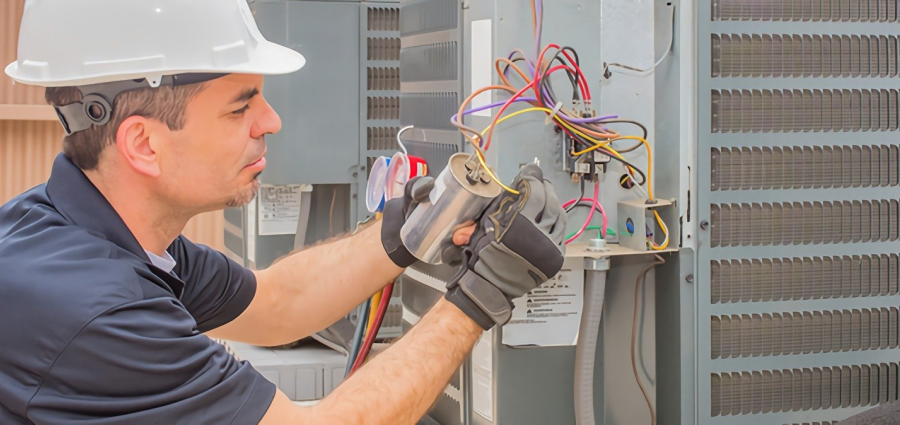
Every row in this table produces two symptoms at once, one financial and one respiratory, which is why fixing the energy problem and fixing the air quality problem are usually the same maintenance visit.
What Most Property Managers Get Wrong
The common assumption is that a higher utility bill and a smell complaint are unrelated, so they get investigated and budgeted separately. That’s backwards. If a building’s summer power bill jumps and the air feels heavier at the same time, that’s not two problems needing two responses, it’s one restricted airflow issue that a coil cleaning and a filter change will usually resolve together.
Filter Types and Replacement Frequency
| Filter Type | Typical Replacement Frequency | What It’s Best At Catching |
|---|---|---|
| Basic fiberglass | Every 30 days | Large dust and lint |
| Pleated | Every 60 to 90 days | Pet dander, pollen |
| HEPA | Every 6 to 12 months | Fine particulates, smoke |
| Carbon activated | Every 90 days | Odours, VOCs |
A basic fiberglass filter left in for six months isn’t quietly doing nothing, it’s actively restricting airflow the entire time, which is what drives both the energy waste and the air quality drop described above.
The Real Risk Nobody Puts a Dollar Figure On
Mold growing in a drain pan or duct doesn’t show up on an energy bill at all, which is exactly why it gets missed the longest. A clogged condensate line backs up quietly, floods a ceiling tile, and by the time anyone notices the water stain, the mold has usually been growing in a dark, humid space for weeks. This is the kind of problem that never shows up in a maintenance report because there’s no maintenance report being generated for it in the first place, since it happens in the gap between scheduled visits.
Why This Sits Under Facility Management, Not Just HVAC
Catching a slow drain pan backup or a dirty filter before it becomes a smell complaint requires someone walking the building regularly, not just an HVAC technician showing up twice a year. Buildings that fold HVAC oversight into their facility management services get that regular walk-through built into the same schedule as cleaning and general upkeep, so a slow drain backup gets flagged during a routine visit instead of six weeks later as a tenant complaint.
That’s the practical argument for coordinating HVAC oversight alongside your other building services instead of treating it as a separate, once-in-a-while vendor relationship. The problems described in this article rarely get caught by the HVAC contractor alone, because they’re not on site often enough to catch a slow leak before it becomes visible damage.
Frequently Asked Questions
Does a dirty air filter really increase my energy bill?
Yes. A clogged filter restricts airflow, which forces the blower motor to run longer to reach the same thermostat setting, and that extra run time draws more electricity. Replacing filters on schedule is one of the lowest-cost ways to keep energy use down.
Can HVAC problems actually cause mold growth?
Yes, most commonly through a clogged condensate drain line that backs up into the drain pan or surrounding ductwork. Standing moisture in a dark, humid space is exactly the condition mold needs to grow, and it often isn’t caught until a smell or a ceiling stain appears.
What are VOCs and how does HVAC maintenance affect them?
Volatile organic compounds are chemical gases released by things like fresh paint, new carpet, and cleaning products. A properly circulating HVAC system dilutes these by bringing in filtered outside air, while a system with poor airflow lets them build up in stagnant areas of a building.
Is it worth paying for a facility management provider just to catch these issues earlier?
For a building with multiple vendors and no single person doing regular walk-throughs, yes, because the biggest risks in this article (drain backups, filter neglect, slow airflow loss) tend to develop between scheduled HVAC visits rather than during them. Regular building walk-throughs catch these before they escalate.