HEALTHCARE FACILITIES · CANADA-WIDE
Hospital And Healthcare Facility Management Services
Environmental cleaning, waste handling and building maintenance for healthcare sites, delivered on a risk-based schedule and verified with results you can put in front of a reviewer, backed by the same standard as our Medical & Dental Facilities Cleaning program.
- Risk-based cleaning schedules
- ATP-verified results
- Waste streams kept separate
Clean Is Not A Judgment Call
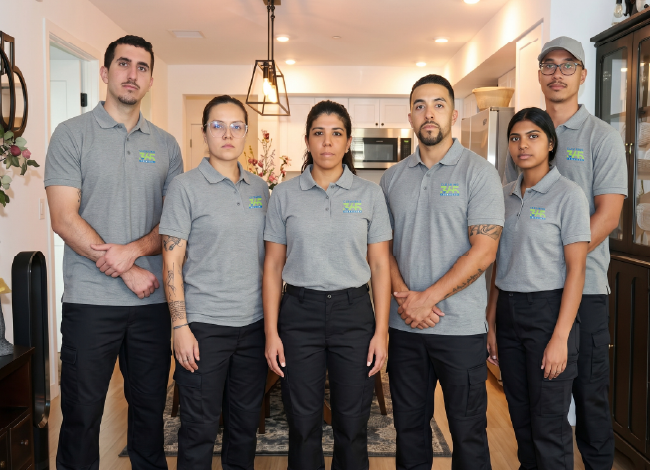
surfaces verified by ATP testing rather than by appearance

ISO 9001

EcoLogo Certified

WSIB Insured
WHMIS Certified
GREENGUARD
IPC Member
WHY HEALTHCARE IS DIFFERENT
What Facility Management Involves In A Healthcare Setting
WHY HOTELS CHOOSE US
A Plain Explanation Of Risk-Based Cleaning, And Why Frequency Alone Is Not A Standard.
Facility management in a healthcare setting covers the same building services as anywhere else, with one difference that changes how every one of them is scheduled and measured. In an office, cleaning is judged on appearance. In a hospital, clinic or long-term care home it is an infection prevention control, held to the same clinical standard as our Disinfection & Health Cleaning program, which means the schedule is set by clinical risk rather than by floor area. A room housing someone on contact precautions is cleaned differently from the same room a week earlier, with a different product, a different sequence and a different set of disposal rules. High-touch surfaces get attention that a visual inspection would say they did not need. Waste separates into streams that cannot travel together. And the result is verified rather than assumed, because a surface can look perfectly clean and still fail a test.
Cleaning Judged On Appearance
- One schedule applied across the whole site
- The same product used everywhere
- Quality assessed by walking the floor
- Waste separated only where it is obvious
Risk-Based Environmental Cleaning
- Frequency set by clinical risk in each area
- Product and contact time matched to the task
- Results verified by testing and audit
- Every waste stream separated and documented
THE SURFACES THAT MATTER
The Highest-Risk Surfaces In A Healthcare Building Are The Ones Nobody Notices.
Floors get attention because they are large and visible. The surfaces that actually carry organisms between patients are small, and most of them are touched dozens of times in a shift: bed rails, call bells, over-bed tables, IV poles, door handles, light switches, keyboards and the grab bars in a patient washroom. None of them look dirty, which is precisely the problem, because a cleaner working to a visual standard will spend twenty minutes on a floor and forty seconds on the equipment beside the bed. A risk-based specification inverts that, the same discipline applied across every site under Learn about our Commercial Facility Management Company. High-touch surfaces are listed individually, given a frequency, cleaned in a defined sequence from cleanest area to dirtiest, and then checked. That is where ATP testing and fluorescent marker audits earn their place: they measure what was actually done rather than what the schedule said should have been done.
WHAT WE DELIVER
Our Healthcare Facility Management Services
Environmental Services On One Side, Building Systems And Site Support On The Other.
ENVIRONMENTAL SERVICES
Cleaning, Disinfection And Waste
The clinical cleaning program and the waste streams that come with it.
- Risk-based environmental cleaning
- Terminal and discharge cleaning
- High-touch surface disinfection
- Isolation and precaution room protocols
- Biomedical and sharps waste handling
- ATP testing and audit reporting
BUILDING SERVICES
Systems, Safety And Site Support
The technical and support services that keep a healthcare building operating around the clock, including the coverage detailed under Explore Fire Detection & Protection Services and the outdoor upkeep handled through See our Landscaping & Grounds Maintenance Services page.
- HVAC maintenance and filter management
- Plumbing and water system upkeep
- Electrical and lighting maintenance
- Fire safety and life safety systems
- Security, access control and reception
- Waste, recycling and grounds services
RISK ZONES
The Areas We Clean, By Risk Level
Vertical transportation matters differently depending on who relies on it.
Operating Rooms
Intensive Care Units
Isolation & Precaution Rooms
Patient & Resident Rooms
Emergency & Triage
Laboratories
Pharmacy & Clean Supply
Dialysis & Treatment Areas
Imaging & Diagnostics
Waiting Rooms & Corridors
Kitchens & Food Service
Soiled Utility & Waste Rooms
The classification is what makes a program defensible. An operating room turnover is a timed procedure with a fixed sequence, because the next case is already waiting, the kind of scheduled, one-off intensity also seen in our Project-Based Commercial Cleaning solutions. An isolation room needs a different product, a different order of work and a full terminal clean at discharge. A waiting room is lower clinical risk and higher public visibility, which makes it a presentation problem more than an infection one. A soiled utility room is the reverse of that. Assigning every area a risk level at the start is what stops a program from quietly defaulting to the same schedule everywhere, and it is usually the first thing a reviewer asks to see.
RISK TO AUDIT SCORE
How A Healthcare Cleaning Program Is Built And Verified
1
Risk Assessment
Every area is walked with your infection prevention and control lead and assigned a risk level, which sets its cleaning frequency, its products and its method.
2
Written Protocols
Task lists, product contact times, cleaning sequences and precaution procedures are documented per area rather than carried in people’s heads as practice.
3
Staff Training
Assigned personnel are trained on the protocols, on WHMIS and on precaution procedures before they work in a clinical area, and retrained whenever a protocol changes.
4
Daily Delivery
Cleaning runs to the schedule, with terminal cleans, precaution rooms and operating room turnovers each handled to their own written procedure.
5
Verification And Reporting
ATP testing and audits check what was actually achieved, results are trended over time, and shortfalls are corrected and recorded rather than argued about.
10+
Years in operation
500+
Buildings serviced
24/7
On-site coverage available
100%
Insured & bonded
WHY IT MATTERS HERE
Why Healthcare Facilities Trust Cleaning 365
In This Sector The Contract Is Judged By People Who Will Ask To See The Evidence.
Verified, Not Assumed
ATP testing puts a number on surfaces that a visual inspection would pass, which is the difference between believing a room is clean and being able to demonstrate it.
Protocols Written Per Area
Frequency, product, contact time and sequence documented for every risk level, so the standard does not depend on who happens to be on shift.
Trained For Clinical Environments
Staff are trained on precaution procedures, product handling and waste segregation before they enter a clinical area rather than while they are in one.
Waste Streams Kept Separate
Biomedical, sharps, cytotoxic, general and recycling handled and documented as distinct streams under the requirements each one carries.
Records Ready For Review
Audit results, training records, product data and waste documentation kept current, so a review is a reading exercise rather than a search.
One Contract For The Site
Environmental services run alongside maintenance, security and waste under one point of contact, which matters when a plumbing fault becomes an infection control issue.
WHAT DRIVES COST
Healthcare Facility Management Pricing
Priced Around Clinical Risk, Coverage Hours, And How Much Verification You Need.
Facility Size And Type
Square footage, bed count and clinical mix
Risk Profile
Proportion of high-risk clinical area to public space
Coverage Hours
Day coverage, extended hours or continuous on-site presence
Verification Level
Standard audits, or full ATP testing with trend reporting
Get A Healthcare Facility Quote In 30 Minutes
Tell us your facility type, size and clinical mix. We will send transparent pricing with no hidden fees.
FROM THE FLOOR
Trusted By Healthcare Operations Teams
“Our previous provider could tell us a room had been cleaned. They could not tell us whether it was clean. Having a test result changed that conversation permanently.”
Infection Prevention Lead
Community healthcare facility, Ontario
“Preparing for review used to take over a month. The cleaning documentation is now current all year, so that part of it simply stopped being a project.”
Director of Support Services
Long-term care home, Ontario
CLINICAL AND FACILITY QUESTIONS
Healthcare Facility Management, Answered
An approach that assigns every area of a facility a clinical risk level, and sets its cleaning frequency, products and methods from that, rather than applying a single schedule across the whole building.
A complete clean and disinfection of a room after a patient or resident is discharged or transferred, covering all surfaces and equipment before the space is used again. It follows a documented sequence rather than a general tidy.
ATP testing measures organic residue on a surface and returns a number. Fluorescent marker audits check whether a surface was physically wiped at all. Both measure what was achieved rather than what was scheduled.
Products carry Canadian registration for the setting and are used at the contact times printed on the label. Contact time is where most disinfection quietly fails, so it forms part of the written protocol and part of the training.
Biomedical, sharps, cytotoxic, pharmaceutical, general and recycling streams are segregated at source, containerized and stored under the requirements each one carries, with documentation maintained throughout.
Yes. Audit results, training records, protocols, safety data sheets and waste documentation are kept current and available, which is what a reviewer asks for and rarely finds in one place.
Yes. The risk profile differs from an acute setting, with more weight on resident rooms, dining areas and outbreak response, and the program is built for that rather than scaled down from a hospital specification.
Yes. Outbreak response means increased frequency, changes in product and additional precaution procedures, and the terms are agreed in the contract in advance so they do not have to be negotiated in the middle of one.
A Cleaning Standard You Can Demonstrate
Risk-based protocols, ATP verification and documentation kept current for review. Book a free facility assessment and get a fixed monthly quote.