- Cleaning 365
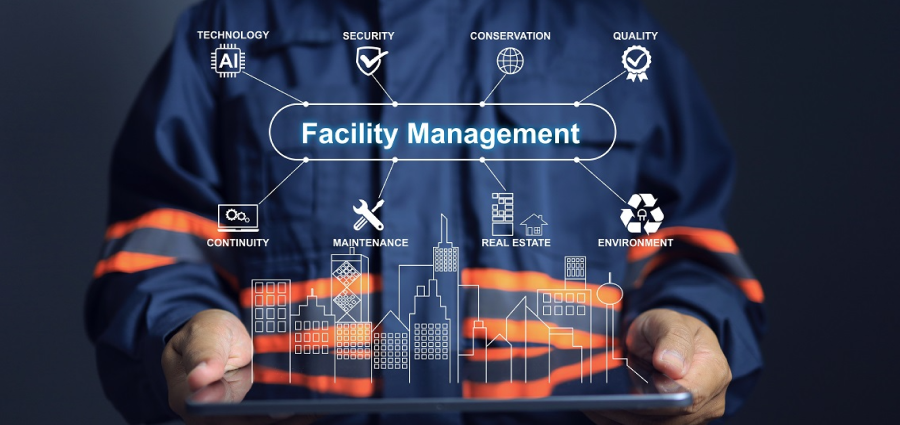
Facility management for industrial plants coordinates building systems, safety protocols, and cleaning operations so a plant can run without unplanned downtime, safety incidents, or compliance violations. It brings together hard FM, such as HVAC, electrical, and piping, with soft FM, such as industrial cleaning and waste handling, under a program built around production continuity. Much of this coordination runs through dedicated warehouse & logistics facility management programs rather than a general commercial scope adapted for a production environment.
For a plant manager or operations director, the stakes are higher than in a typical commercial building. A single unplanned shutdown can cost far more than routine maintenance ever would, and a missed safety requirement can put workers at real risk. This guide covers what facility management actually involves in an industrial setting, backed by dedicated factory & warehouse cleaning services, and how Cleaning 365 Services structures it so safety, uptime, and efficiency work together instead of competing for budget.
What Is Facility Management for Industrial Plants?
Facility management for industrial plants is the coordinated maintenance, cleaning, and safety oversight of a manufacturing or industrial facility, built around keeping production running while protecting workers and meeting regulatory requirements.
It covers three connected areas:
- Hard FM: HVAC, electrical systems, piping, plumbing, lighting, and structural maintenance
- Soft FM: industrial cleaning, washroom hygiene, waste management, and site upkeep
- Safety and compliance: occupational health and safety adherence, hazardous materials handling, and audit-ready documentation
In an industrial plant, these areas are tightly connected. A cleaning gap in a production area can become a safety hazard. A maintenance delay on a single piece of equipment can stop an entire line. Treating hard FM, soft FM, and safety as three separate concerns is where most plants run into avoidable downtime. This is the same coordination logic behind Retail facility management programs, though an industrial plant carries a higher safety and regulatory margin than a customer-facing retail space does. Our Integrated facility services guide covers how this three-area structure gets scoped during onboarding across different facility types.
Safety and Compliance in Industrial Facility Management
Safety and compliance in an industrial plant means meeting the regulatory standards that apply to hazardous materials, worker protection, and site access, and being able to prove it during an inspection.
The main compliance areas a Canadian industrial plant needs to manage include:
- Occupational health and safety: adherence to the applicable provincial Occupational Health and Safety Act, which sets requirements for hazard control, worker training, and incident reporting
- Hazardous materials handling: labelling, storage, and staff training under WHMIS 2015 for any chemicals or hazardous substances on site
- Workers’ compensation coverage: WSIB or the equivalent provincial workers’ compensation board coverage for everyone working on site, including contractors
- Access control: securing restricted zones and tracking which contractors and visitors are on site at any given time
- Environmental health monitoring: continuous tracking of air quality and, in food, pharmaceutical, or electronics production, cleanroom-specific hygiene protocols that go beyond standard industrial cleaning
- Audit-ready documentation: centralized, up-to-date records that can be produced quickly during a regulatory or insurance inspection
How Cleaning 365 Services’ Team Handles This
Our Maintenance & Technical team documents every safety-related task, from lockout procedures to hazardous material handling, so your plant has a centralized compliance record instead of scattered paperwork across multiple vendors. Because we are 100% insured and bonded, and our staff are trained under WHMIS 2015, your plant is not carrying the liability of an undertrained or uninsured cleaning or maintenance crew.
Uptime and Reliability: Why Preventive Maintenance Matters
Uptime in an industrial plant depends on catching equipment wear before it causes a failure, not on how fast a crew can respond after something breaks down.
The core practices that protect uptime include:
- Preventive maintenance schedules: routine checks on HVAC, electrical, and mechanical systems that catch wear before it becomes a failure, typically tracked through a computerized maintenance management system (CMMS) rather than paper logs
- Predictive monitoring: sensors and connected monitoring tools that track machine wear, temperature spikes, or electrical faults in real time, catching a developing fault between scheduled inspections rather than waiting for the next one
- Work order tracking: a clear system for logging, assigning, and closing out maintenance requests so nothing gets missed
- Asset lifecycle awareness: knowing the age and condition of major equipment so replacement can be planned instead of forced by an emergency
- Fast-response emergency support: a plan for when something does fail unexpectedly, so downtime is measured in hours, not days
A plant that only responds to equipment failures after they happen is, by definition, always managing a crisis instead of preventing one.
Measuring Facility Management Performance
Uptime and reliability are easier to manage when they’re tracked with actual numbers instead of a general sense that things are running smoothly. Three metrics are worth tracking on an ongoing basis:
- Mean Time Between Failures (MTBF): how long a piece of equipment typically runs before it fails, which helps plan replacement and flag equipment that’s failing more often than it should
- Maintenance cost per square foot: a way to compare facility spending across buildings or against industry benchmarks, rather than judging cost in isolation
- Preventive-to-reactive work ratio: the proportion of maintenance work that’s scheduled versus emergency, since a rising reactive share is usually an early sign that preventive scheduling is falling behind
How Cleaning 365 Services’ Team Handles This
Our Facility Management team builds a preventive maintenance schedule specific to your plant’s equipment and production schedule, rather than applying a generic template. Because we offer 24/7 emergency response every day of the year, an unexpected failure gets a technician moving immediately instead of waiting on the next available slot from a fragmented vendor list.
Efficiency and Resource Management
Efficiency in industrial facility management means running building systems and cleaning operations in a way that controls cost without compromising safety or production output.
The main efficiency levers a plant can manage include:
- Energy use: HVAC scheduling, lighting upgrades, and equipment tuning that reduce utility cost without affecting production
- Integrated services: combining cleaning, waste disposal, and utility maintenance under one coordinated framework instead of separate, disconnected contracts, the same model covered in our Integrated facilities management overview
- Vendor consolidation: fewer, better-coordinated contracts reduce administrative overhead and reduce the risk of gaps between vendors, which is the core comparison behind any Integrated vs traditional fm decision a plant has to make
- Resource planning: using maintenance and cleaning records to inform staffing and budget decisions instead of guessing
[INTERNAL LINK: suggested anchor text “integrated facility management services”]
How Cleaning 365 Services’ Team Handles This
We combine hard FM and soft FM under one contract with one accountable facility manager, so your plant is not coordinating separate invoices, schedules, and points of contact for cleaning, maintenance, and waste management. Our Quality & Reporting team provides regular reporting so operations leadership can see performance and spending in one place.
Hard FM vs Soft FM in Industrial Plants
Hard FM and soft FM cover different systems in an industrial plant, but both directly affect safety and production uptime, which is why they work best when managed together.
| Category | Hard FM | Soft FM |
|---|---|---|
| Focus | HVAC, electrical, piping, plumbing, structural maintenance | Industrial cleaning, waste management, washroom hygiene, site upkeep |
| Primary risk if neglected | Equipment failure, unplanned downtime, safety hazard | Contamination risk, slip and fall hazards, regulatory non-compliance |
| Typical frequency | Preventive schedule plus emergency response | Daily to multiple times per shift depending on production activity |
| Documentation needed | Maintenance and inspection records | Cleaning logs and waste handling records |
Building a Facility Management Program for an Industrial Plant
A facility management program for an industrial plant works best when it follows a clear sequence rather than being assembled reactively after problems appear.
- Assess the current state of the plant. Document equipment condition, existing maintenance gaps, and current cleaning standards before building a new schedule.
- Map the applicable regulatory framework. Identify the provincial Occupational Health and Safety Act, WHMIS requirements, and any sector-specific regulations that apply to the plant.
- Build a preventive maintenance calendar. Schedule HVAC, electrical, and mechanical checks on a recurring basis tied to production needs, not a generic interval.
- Set cleaning standards for every zone. Production floors, washrooms, break areas, and loading docks each need their own frequency and protocol.
- Assign one accountable point of contact. A single facility manager who owns both maintenance and cleaning removes the coordination gap between separate vendors.
- Set up centralized documentation. Maintenance records, cleaning logs, and safety training records should be structured to match what an inspector or auditor will ask for.
- Review the program on a set cadence. Production changes, new equipment, and updated regulations all affect what the program needs to cover.
How Cleaning 365 Services’ Team Handles This
Our Site Inspection & Onboarding team runs this exact sequence for every new industrial client, starting with a free site inspection and typically returning a custom quote within 30 minutes and a fixed monthly quote within one business day. From there, your plant gets one contract and one accountable contact for every hard FM and soft FM service on site.
Common Gaps in Industrial Facility Management
Most industrial facility problems build up from a small number of repeated gaps rather than a single catastrophic failure.
| Common Gap | Why It Happens |
|---|---|
| Vendor fragmentation | Separate cleaning, maintenance, and waste contracts with no shared reporting |
| Reactive-only maintenance | No preventive schedule, so equipment is fixed only after it fails |
| Inconsistent safety documentation | Records kept informally or scattered across departments, slowing down audits |
| Missed WHMIS training refreshers | Staff training not renewed on schedule for hazardous materials handling |
| Underestimating cleaning’s role in safety | Treating industrial cleaning as cosmetic instead of a slip, contamination, and fire risk control |
| No performance metrics tracked | Uptime and maintenance spend judged by feel instead of MTBF or cost-per-square-foot data |
How Cleaning 365 Services Structures Industrial Facility Management
An industrial plant should not need one vendor for cleaning, another for maintenance, and a third for waste management. Cleaning 365 Services combines hard FM, soft FM, and safety-focused reporting under a single contract with one accountable facility manager.
That structure includes:
- One accountable facility manager for hard FM, soft FM, and reporting
- Preventive maintenance scheduling for HVAC, electrical, and mechanical systems
- Industrial cleaning protocols built around production zones, not a generic commercial checklist
- WHMIS-compliant staff training and hazardous material handling
- 24/7 emergency response every day of the year
- Certifications currently held including UL ECOLOGO, ISO 9001, GREENGUARD, WSIB coverage, IPC membership, and WBE certification
- Ten-plus years managing buildings across Canada, with more than 500 buildings currently under care
See our Integrated facility management canada overview for how this structure adapts across different provinces and production environments.
These certifications reflect standards we currently hold and support your plant’s safety and cleanliness program. They do not replace the plant’s own regulatory obligations under provincial occupational health and safety law or sector-specific requirements.
FAQ
What is the difference between facility management and maintenance in an industrial plant?
Maintenance covers the repair and upkeep of specific equipment and systems. Facility management is broader and includes maintenance, cleaning, safety compliance, and the coordination and documentation that ties all three together across the whole site.
Why is preventive maintenance important in an industrial plant?
Preventive maintenance catches equipment wear before it causes a failure, which protects production uptime and worker safety. Reactive-only maintenance tends to cost more over time and creates unpredictable downtime that is harder to plan around.
What safety regulations apply to industrial plants in Canada?
Canadian industrial plants are governed primarily by the applicable provincial Occupational Health and Safety Act, WHMIS 2015 for hazardous materials, and provincial workers’ compensation board requirements such as WSIB in Ontario, alongside any sector-specific regulations that apply to the plant’s operations.
How does industrial cleaning affect plant safety?
Industrial cleaning directly affects slip and fall risk, contamination control, and fire risk, especially in production areas where spills, dust, or residue can build up quickly. Treating cleaning as a safety function, not just a cosmetic one, is a key part of a compliant facility management program.
What is the strongest tool a facility manager has for reducing downtime?
A documented preventive maintenance schedule, tracked through a CMMS or similar centralized system, tends to matter more than any single piece of equipment or sensor technology. Predictive monitoring tools add value on top of this, but they work best layered over a preventive schedule rather than replacing one.
Can one provider manage both maintenance and cleaning for an industrial plant?
Yes. Combining hard FM and soft FM under one contract with a single accountable facility manager, as Cleaning 365 Services structures its industrial contracts, removes the coordination gaps that happen when maintenance and cleaning are managed by separate, disconnected vendors.
What causes the most downtime in industrial facility management?
Unplanned equipment failure is typically the largest driver of downtime, and it is most often caused by the absence of a preventive maintenance schedule rather than a single unpredictable event. Vendor fragmentation and delayed response times can also extend downtime once a failure occurs.
Does having certifications like ISO 9001 guarantee an industrial plant meets all safety codes?
No. Certifications such as ISO 9001, UL ECOLOGO, or GREENGUARD reflect standards a facility management provider currently holds for its own operations. They support a plant’s safety and cleanliness program but do not replace the plant’s own obligations under provincial occupational health and safety law.