- Cleaning 365
A tenant calling to report a broken thermostat on the same week the parking lot lighting failed is what commercial facility management exists to prevent. When building systems, cleaning, and vendor coordination all run on their own separate track, small issues stack up until they hit at once. A commercial facility management company exists to keep that from happening by coordinating every part of a building’s upkeep under one plan instead of leaving each piece to chance.
Commercial facility management coordinates the physical building, its equipment, and its day-to-day operations so the space stays safe, efficient, and productive for everyone who uses it. This guide breaks down what that actually covers, the practices that keep operations smooth, and where cleaning fits into the picture, since it’s a piece most facility management guides treat as an afterthought rather than a core part of facility management services.
What Does Commercial Facility Management Actually Cover?
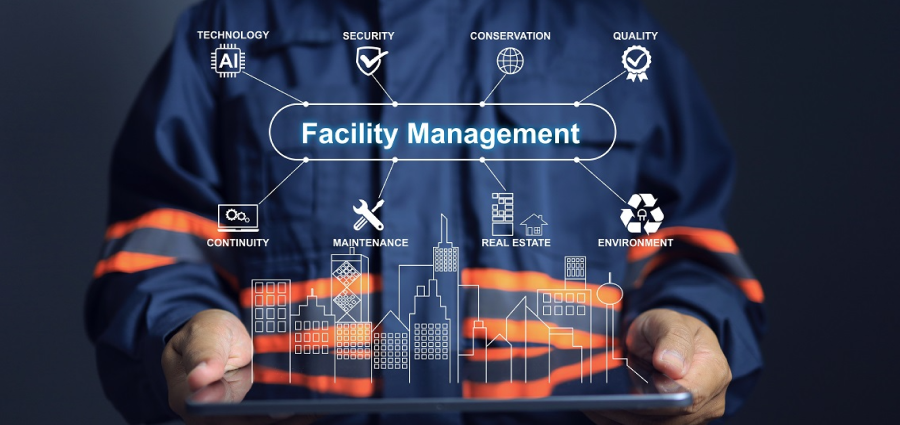
Commercial facility management covers four connected areas: the building’s physical systems, safety and code compliance, vendor oversight, and how the space and grounds are used and maintained day to day.
- Building systems: HVAC, plumbing, electrical, and elevators need to run safely and reliably, since a failure in any one of them disrupts the whole building, not just the room it’s in.
- Safety and code compliance: fire codes, accessibility requirements, and local building safety laws apply continuously, not just during an inspection.
- Vendor oversight: hiring and managing the contractors who handle cleaning, security, waste removal, and specialized repairs, with clear performance standards rather than an informal handshake arrangement.
- Space and grounds: clean interiors, organized layouts, parking areas, and landscaping all shape how the property functions and how it’s perceived by everyone who walks through it.
Asset tracking sits underneath all four of these. Monitoring how long a piece of equipment has left before it needs replacing is what lets a facility manager plan a repair instead of reacting to a breakdown.
Why Cleaning Belongs at the Center of Commercial Facility Management, Not the Edge
Cleaning gets treated as a minor vendor category in most facility management discussions, usually mentioned in the same breath as waste removal and grounds contracts. That framing misses how much cleaning actually protects the rest of the building. A carpet that isn’t vacuumed on schedule wears out years early. A washroom that’s inconsistently serviced becomes the first thing a tenant or client complains about, long before an HVAC issue would ever surface.
Facility management cleaning is where most occupants actually experience the quality of a facility management program, since building systems are mostly invisible when they’re working, while cleanliness is visible constantly. Treating cleaning as core infrastructure rather than a background task changes how it gets scheduled, staffed, and reported on.
Best Practices for Smooth Commercial Facility Management Operations
A handful of operational habits separate a well-run commercial property from one that’s constantly catching up on deferred work.
- Use preventive care. Inspecting equipment on a schedule catches small issues before they turn into an emergency repair, which almost always costs more than the scheduled fix would have.
- Centralize work orders. Tracking maintenance requests and vendor tasks in one digital system, instead of scattered emails and texts, means nothing gets lost between the person who noticed the problem and the person who’s supposed to fix it.
- Manage vendors with clear standards. Every outside contractor, cleaning crew included, needs a documented performance expectation rather than a general sense of “do a good job.”
- Adopt smart monitoring where it fits. Sensors that track temperature shifts or detect a hidden leak can flag a problem before an occupant notices it, which matters most for systems that fail quietly, like a slow pipe leak behind a wall.
How Does Commercial Facility Management Differ Across Building Types?
Commercial facility management isn’t one-size-fits-all. A warehouse’s facility needs look nothing like a corporate office tower’s, and neither looks like a residential property’s. A Commercial vs residential fm comparison is worth understanding here, since commercial properties carry compliance obligations, tenant-facing standards, and vendor complexity that a residential building generally doesn’t.
Corporate offices in particular have their own set of expectations, since employees, clients, and visitors all judge the space differently than they would a warehouse or industrial site. Our breakdown of Corporate facilities management covers how office-specific factors, like meeting room turnover and reception-area presentation, shape a program differently than a purely industrial property would.
How Does Asset Tracking Fit Into Commercial Facility Management?
Asset tracking is the practice of monitoring a building’s equipment, from HVAC units to elevators, so replacement parts and major repairs get scheduled before a failure forces the issue. Durable asset tags or a connected tracking system tie each piece of equipment to a maintenance history, which turns a guess about remaining lifespan into an actual data point.
Our overview of Facility asset management covers how this tracking gets set up in practice, including what a facility manager should expect during onboarding when a new provider inventories a building’s systems for the first time.
How Does Cleaning 365 Services Structure Commercial Facility Management?
Cleaning 365 Services starts every engagement with a free site inspection, so the scope of hard FM, soft FM, and cleaning work is based on the building’s actual condition rather than a generic template. From there, a custom quote and a fixed monthly quote follow within a short turnaround, giving building owners a clear number to plan against.
The Facility Management team acts as the single accountable contact across cleaning and maintenance, so vendor oversight is handled internally rather than left to the building owner to coordinate. Our Facility management canada guide covers how this structure adapts across different provinces and building types, since compliance requirements and vendor availability vary by region.
Frequently Asked Questions
What are the four P’s of facility management?
The four P’s commonly referenced in facility management are people, place, process, and technology (sometimes labeled “product”). People covers staff and occupants, place covers the physical building and grounds, process covers the workflows and maintenance schedules that keep things running, and technology covers the tools used to track and manage all of it.
What is the strongest tool of a facility manager?
A centralized, documented tracking system, whether for work orders, asset condition, or compliance records, tends to matter more than any single piece of equipment or software brand. The specific tool matters less than whether information is captured consistently and available when a decision needs to be made.
How often should commercial building systems be inspected?
Inspection frequency depends on the system and its age, but HVAC, electrical, and fire safety systems are generally inspected on a scheduled cadence, often quarterly or semi-annually, rather than only after something fails. Older systems typically need more frequent checks than newer, better-maintained equipment.
Does commercial facility management include cleaning services?
Yes. Cleaning is part of what’s known as soft facility management, alongside services like waste management and grounds maintenance, while building systems like HVAC and electrical fall under hard facility management. A complete program addresses both rather than treating cleaning as separate from the rest of building upkeep.
What’s the difference between reactive and preventive facility management?
Reactive facility management addresses problems after they happen, which is typically more expensive and disruptive. Preventive facility management schedules inspections and servicing on a recurring basis to catch small issues before they become emergencies, which is the standard most established providers build their programs around.