- Cleaning 365
Property managers carry a massive responsibility to protect their occupants from hidden dangers. A pristine building exterior means absolutely nothing if the internal wiring poses a lethal threat to the people inside. Commercial structures consume incredible amounts of power every single day to keep heavy machinery, computer servers, and massive HVAC units running smoothly. This massive electrical load stresses internal wires and distribution panels constantly. Ignoring the physical stress placed on these systems guarantees sudden power failures and catastrophic structural fires.
Recognizing critical electrical hazard warning signs protects building occupants and ensures strict regulatory compliance with local fire codes. You must train your internal facility staff to spot the visual and physical clues of a failing electrical system. This structured guide exposes exactly what dangerous wires look, smell, and sound like. You will learn how to identify overloaded circuits and discover the exact safety signage required to keep untrained employees away from lethal high voltage zones.
Identifying Physical and Environmental Electrical Hazard Warning Signs
Electricity leaves distinct physical clues when it escapes its intended path. Heat and sound serve as the earliest indicators of a failing system. You must investigate these environmental changes immediately to prevent severe structural damage.
Warm or Discolored Wall Outlets
Standard wall outlets should always feel completely cool to the touch. Switch plates or outlets that feel hot indicate dangerous overloading or loose internal wiring.
When a wire connection loosens inside the wall, the electricity must jump across a tiny air gap to maintain the circuit. This microscopic jump creates intense friction and heat. The heat eventually scorches the plastic outlet cover, leaving distinct yellow, brown, or black burn marks. You must cut power to any warm outlet immediately before the plastic melts and ignites the surrounding wooden wall studs.
Flickering or Dimming Overhead Lights
Many property owners mistakenly assume flickering lights simply indicate a dying lightbulb. Lights that dim or flicker frequently point to severely overloaded circuits or faulty connections inside your main service panel.
If your overhead lights dim exactly when a heavy appliance like an air conditioner or commercial refrigerator kicks on, your panel lacks the capacity to handle the electrical demand. This massive voltage drop forces sensitive computer equipment to shut down and damages expensive appliance motors over time.
Frequent Circuit Breaker Trips
Circuit breakers exist solely to protect your building from massive electrical fires. Breakers shutting off repeatedly mean the system is drawing significantly more power than it can safely handle.
A tripped breaker is doing its exact job. Resetting a breaker multiple times without investigating the root cause forces the internal spring mechanism to degrade. A degraded breaker will eventually fail to trip during an overload, allowing the internal wall wires to glow red hot and catch fire.
Unusual Odors and Buzzing Sounds
Healthy electrical systems operate completely silently and produce zero odors. A faint burning plastic smell near panels or outlets signals failing wire insulation.
Electricity escaping a loose wire creates a highly distinct buzzing or crackling sound inside the wall. This sound indicates active electrical arcing. The electrical current is violently sparking across a broken connection.
Info: Never ignore a smell reminiscent of rotting fish or urine near an electrical outlet. Melting electrical plastic and burning wire insulation often produce this specific, highly pungent odor just before a fire ignites.
Quick Reference Guide for Physical Symptoms
Use this table to understand the exact root causes of common physical warning signs:
| Warning Sign | Primary Root Cause | Immediate Action Required |
|---|---|---|
| Warm Outlet Faceplate | Loose terminal screws | Turn off the circuit breaker instantly |
| Flickering LED Lights | Overloaded circuit capacity | Unplug heavy appliances nearby |
| Tripping Breakers | Excessive electrical draw | Map the circuit to balance the load |
| Fishy Plastic Odors | Melting wire insulation | Evacuate the immediate room area |
Recognizing Hidden Faulty Wiring Symptoms
Building owners often miss the subtle warnings occurring out of plain sight. Wires degrade naturally over decades of use, and rodents chew through protective sheathing inside dark crawlspaces. You must stay vigilant for these less obvious faulty wiring symptoms.
Sparks When Plugging in Appliances
A tiny, brief blue spark occasionally occurs when plugging in a heavy device. A large yellow or orange spark accompanied by a loud pop signals a massive problem. Large sparks indicate the outlet receptacle is severely worn out. The internal metal contacts can no longer grip the appliance plug tightly, causing the electricity to arc violently out of the wall.
Mild Shocks From Metal Appliances
Touching a metal refrigerator or a commercial stainless steel prep table should never result in a tingling sensation. Receiving a mild shock indicates a severe grounding failure.
The stray electricity has lost its safe path into the earth and is using the appliance metal casing to find a ground. The next person who touches that appliance with wet hands could receive a fatal electrical shock. You must unplug the shocking appliance and hire an electrician to verify the building grounding system immediately.
Understanding Commercial Electrical Safety Hazards
Commercial facilities operate under entirely different electrical stresses than standard residential homes. Heavy manufacturing equipment and massive server rooms create unique commercial electrical safety hazards that require strict management.
Aging Infrastructure and Outdated Wiring
Older commercial buildings frequently rely on outdated electrical panels designed decades ago. Modern commercial operations utilize massive amounts of technology that overwhelm these old systems instantly.
Outdated panels contain obsolete breakers that no longer trip reliably during a short circuit. Property owners must hire certified electricians to audit their main distribution boards every five years. Upgrading an old panel guarantees your facility can handle new heavy machinery without creating a severe fire hazard.
Overloaded Commercial Power Strips
Office environments rely heavily on extension cords and power strips to plug in computers and monitors. Employees frequently create massive fire hazards by daisy-chaining these devices together.
Enforce these strict rules to prevent power strip fires:
- Never plug one power strip directly into another power strip.
- Plug heavy items like space heaters and microwaves directly into the wall.
- Remove any power strip showing signs of melted plastic or frayed cords.
- Use only commercial-grade surge protectors featuring internal circuit breakers.
Note: Standard extension cords are designed strictly for temporary use. If your office requires a permanent extension cord to reach a desk, you must hire an electrician to install a permanent wall outlet.
Essential Safety Signage Every Owner Needs
Warning your employees about dangerous areas prevents fatal workplace accidents. The Occupational Safety and Health Administration mandates highly specific signage for commercial properties. You must post clear warnings to stop untrained personnel from interacting with lethal voltage.
High Voltage Danger Markers
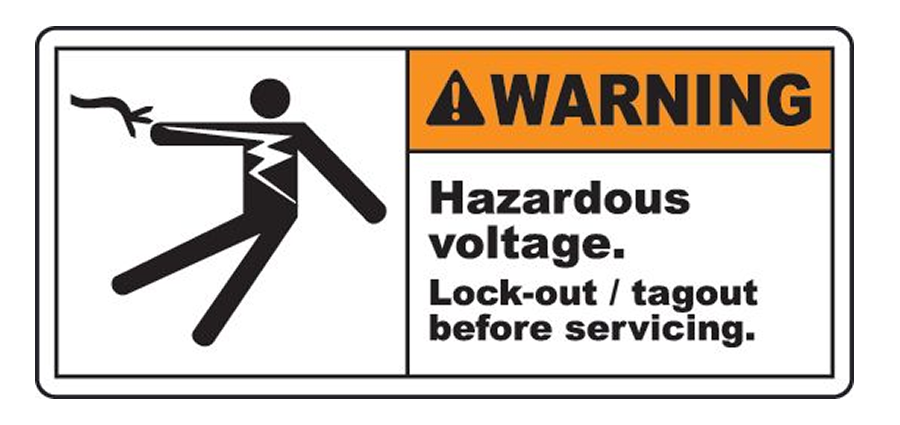
High voltage equipment kills instantly upon contact. Red, black, and white danger markers are required near transformers, substations, and high-voltage equipment to warn of severe shock or death.
These signs must feature bold, high-contrast lettering. You must mount these signs directly at eye level on the doors leading to your main electrical rooms. The sign establishes clear legal liability and stops curious employees from opening deadly electrical enclosures.
Panel Clearance and Access Labels
Emergency responders must access your electrical panels immediately during a building fire. Blocked panels trap firefighters in a burning building without a way to cut the power safely.
Notices specifying minimum clearances prevent blocked access. You must paint bold yellow lines on the floor and place large wall labels dictating a strict 36-inch clear workspace in front of every single electrical panel. These labels legally prevent janitorial staff from stacking cardboard boxes or mop buckets against the distribution boards.
Authorized Personnel Only Restrictions
Standard employees have absolutely no reason to enter a commercial electrical room. Posted signs restricting entry strictly to qualified technicians keep your staff safe from accidental electrocution.
Lock the doors to your main electrical rooms permanently. Place an “Authorized Personnel Only” sign directly above the doorknob. Only your facility manager and certified electrical contractors should hold the key to this highly dangerous room.
Arc Flash Warning Labels
An arc flash is a violent electrical explosion that vaporizes solid copper wire and creates a massive fireball. Commercial panels operating under heavy loads present a severe arc flash risk to maintenance workers.
Specialized labels indicating hazard categories and required personal protective equipment (PPE) must sit directly on the panel covers.
Review this table to understand standard safety signage requirements:
| Signage Type | Required Location | Primary Safety Purpose |
|---|---|---|
| High Voltage Danger | Transformer cages | Warns of immediate lethal shock risk |
| 36-Inch Clearance | Panel floors and walls | Ensures emergency access for firefighters |
| Authorized Personnel | Electrical room doors | Stops untrained staff from entering |
| Arc Flash Warning | Distribution board covers | Dictates exact PPE for certified electricians |
Preventing Electrical Fire Risk Signs from Escalating
Spotting a warning sign means nothing if you fail to take corrective action. You must implement strict preventative measures to stop these electrical fire risk signs from burning your facility to the ground.
Establishing Routine Maintenance Schedules
Commercial electrical systems demand aggressive preventative maintenance. You cannot wait for a breaker to fail before calling a contractor.
Schedule these essential maintenance tasks to protect your building:
- Perform annual infrared thermography scans to find hidden overheating wires.
- Test all GFCI safety outlets in commercial kitchens and bathrooms monthly.
- Tighten main panel connection lugs every three years to prevent arcing.
- Audit all emergency exit lighting batteries to ensure safe building evacuations.
Training Staff to Spot Dangers
Your employees serve as your first line of defense against electrical fires. They interact with wall outlets and light switches every single day.
Hold quarterly safety meetings to teach your staff how to identify burning smells and warm outlets. Create a strict reporting system allowing employees to flag a sparking outlet without fear of punishment. Rapid reporting allows your facility team to shut the power off before the spark turns into an uncontrollable flame.
Final Thoughts
Maintaining a safe commercial building requires strict attention to visual and physical clues. Ignoring warm wall outlets or flickering overhead lights guarantees sudden power failures and structural damage. Property owners must identify these critical electrical hazard warning signs immediately to protect their valuable infrastructure. Posting clear safety signage around high voltage equipment keeps untrained employees away from lethal shock risks. Enforcing strict clearance zones around main distribution panels allows emergency responders to cut power quickly during a crisis.
Your internal maintenance team must treat buzzing sounds and faint burning plastic odors as immediate emergencies. Catching these early faulty wiring symptoms stops minor electrical resistance from escalating into a massive fire. Routine visual inspections and proper safety labels ensure your facility remains completely compliant with local building codes. Stop risking your commercial investment on overloaded circuits. Contact Cleaning 365 Services right now to schedule your professional safety inspection.
Frequently Asked Questions
What are the most common electrical hazard warning signs in a building?
The most critical warning signs include warm or discolored outlet covers, overhead lights that dim frequently, and circuit breakers that trip constantly. You should also listen for buzzing sounds inside the walls and check for faint burning plastic odors near distribution panels.
Why do my commercial overhead lights flicker when the air conditioner turns on?
Lights that flicker or dim when heavy machinery activates indicate an overloaded circuit or a main service panel that lacks proper electrical capacity. The heavy appliance draws so much power upon startup that it starves the lighting circuits, creating a dangerous voltage drop.
What safety signage is required near commercial electrical panels?
Building owners must post clear notices specifying a minimum 36-inch clear workspace in front of all electrical panels. You must also mount “Authorized Personnel Only” signs on electrical room doors and apply specialized arc flash warning labels directly to heavy distribution board covers.
How do I safely handle a wall outlet that feels hot to the touch?
You must walk to your main electrical panel and shut off the circuit breaker controlling that specific outlet immediately. A hot outlet indicates loose internal wiring and severe electrical resistance. Never plug anything else into that receptacle until a licensed electrician inspects the internal connections.