- Cleaning 365
Facility managers face a massive financial dilemma when heavy commercial electrical equipment fails. Choosing between a simple component fix or a massive total system overhaul dictates your operational budget for the entire calendar year. Making the wrong choice leads to endless service calls, severe safety hazards, and wasted working capital. You must rely on strict mathematical formulas and structural safety guidelines rather than guesswork to make this critical financial decision.
This guide breaks down the exact electrical repair vs replacement framework used by certified master electricians. You will learn how to apply the fifty percent cost rule, evaluate dangerous outdated equipment, and execute an accurate electrical repair cost comparison. Mastering this specific decision-making process protects your commercial property from catastrophic electrical fires and ensures your business never overpays to fix completely obsolete hardware.
Establishing the Fifty Percent Cost Rule
Financial math dictates the smartest path forward when heavy machinery breaks down. You cannot make emotional decisions regarding your building infrastructure. The fifty percent rule provides a rigid mathematical boundary to guide your maintenance budget and stop you from wasting money on dying equipment.
Applying the 50 Percent Formula
To decide between an electrical repair or replacement, you must compare the repair cost directly to 50% of the cost of a brand new unit.
If the contractor hands you a repair estimate that equals or exceeds half the price of installing a brand new system, you must reject the repair. Spending $2,500 to fix a dying panel when a brand new panel costs $4,000 makes absolutely zero financial sense. The new panel guarantees decades of flawless operation, while the expensive repair only serves as a temporary bandage on a failing system. You must always ask your electrician to provide quotes for both options before signing any work order.
Factoring in Hardware Age and Lifespan
Mathematical formulas fail if you ignore the physical age of the equipment. You must evaluate the equipment’s age alongside the financial repair quote. A repair that only costs 20% of a new unit might seem like a bargain, but if the machine is 30 years old, that small repair is still a total waste of money.
Combine these two metrics using this simple evaluation strategy:
- Young Equipment (1 to 10 years): Always approve repairs unless the cost exceeds the 50% threshold.
- Mid-Life Equipment (11 to 20 years): Approve repairs only if the cost remains under 30% of replacement value.
- End-of-Life Equipment (25+ years): Reject almost all repairs and mandate a full system replacement.
When to Choose Electrical Repair
Property owners often panic and assume any electrical failure requires a massive system overhaul. In many cases, a targeted fix restores complete functionality without draining your capital reserves. You must recognize exactly when a simple service call serves as the most logical choice.
Fixing Minor, Isolated Issues
Electricity relies on highly specific mechanical connections. Sometimes, a single connection fails while the rest of the massive distribution board remains completely healthy. You must isolate the exact location of the failure before condemning the entire system.
Opt for targeted repairs when you experience these minor, isolated issues:
- A single broken light switch in a commercial office.
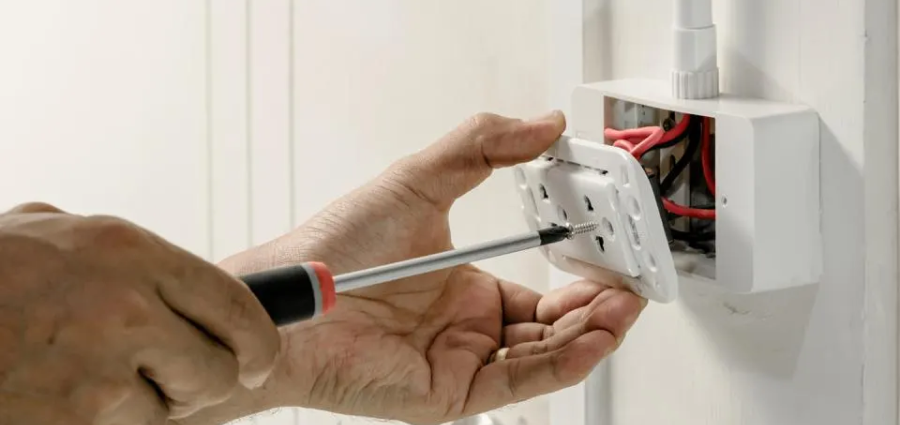
- Loose internal outlet wires causing a single receptacle to drop power.
- One faulty 15-amp circuit breaker that refuses to stay reset.
- A single non-working component like a burnt-out contactor relay.
Fixing these small problems costs very little and restores power instantly. Replacing an entire 200-amp service panel just because one single breaker switch failed wastes thousands of dollars unnecessarily.
Benefiting from Low Cost Fixes
Financial logic dictates that you should always opt for repair when the service call and parts total significantly less than half the price of a brand-new installation or replacement unit.
Low-cost repairs keep your maintenance budget intact. A certified electrician can replace a melted wire lug or tighten a loose grounding bar in under an hour. These quick, inexpensive fixes eliminate the immediate electrical hazard and keep your daily business operations running without triggering a massive capital expenditure request.
Info: Always request a full diagnostic sweep during a minor repair call. A technician can fix your single broken outlet and use a thermal camera to verify the rest of your distribution panel remains completely safe.
Maintaining Newer Equipment
Modern commercial electrical panels are engineered to last for several decades. If your building underwent a massive electrical upgrade five years ago, your equipment remains highly viable.
You must choose to fix items that are well within their expected service life. If the panel still meets your daily electrical load demands perfectly, a targeted repair acts as the smartest financial move. Newer equipment rarely suffers from systemic, dangerous degradation. A failure on a young panel usually points to a single defective factory part or a minor installation error, both of which require cheap, localized repairs.
When to Choose Complete Replacement
Certain electrical failures push your equipment past the point of no return. You cannot apply cheap bandages to severely compromised infrastructure. Understanding when to mandate a full system replacement protects your property from sudden catastrophic fires and keeps your building legally compliant.
Exceeding Age Limits and Life Expectancy
Electrical components degrade physically over decades of heavy commercial use. Internal springs weaken, copper busbars corrode, and plastic insulators turn brittle. You must replace standard electrical panels older than 25 to 40 years.
Older appliances past their prime expectancy become massive liabilities. A 35-year-old distribution board can no longer safely manage the intense power draw of modern computer servers, heavy HVAC units, and advanced manufacturing machinery. Forcing an obsolete panel to carry a massive modern electrical load guarantees a catastrophic system failure.
Managing High Repair Costs
Contractors charge premium labor rates to source obsolete parts and rebuild degraded panels. You must upgrade when the price of the fix exceeds 50% of total replacement costs.
Major fixes that exceed $300 to $500 for older hardware signal the end of the equipment’s viable lifespan. Pumping five hundred dollars into a rusting thirty-year-old panel provides zero return on investment. That same money serves much better as a down payment on a brand new, highly efficient modern distribution board that comes with a fresh manufacturer warranty.
Eliminating Severe Safety and Code Risks
Building safety codes evolve constantly to protect occupants from fatal shock hazards. You must always replace outdated, dangerous equipment that violates modern fire codes. Certain legacy panels pose such severe risks that commercial insurance companies will cancel your policy if they discover them on your property.
Mandate immediate replacement if you encounter these severe safety risks:
- Federal Pacific or Zinsco Panels: These specific legacy brands are notorious for failing to trip during a short circuit, causing massive structural fires.
- Fire-Damaged Wiring: Any panel showing internal scorch marks, melted plastic, or black soot requires complete replacement.
- Water Infiltration: Panels showing heavy internal rust from a roof leak or basement flood.
- Chronic Tripping: Units that trip constantly despite load balancing, indicating severe internal mechanical degradation.
Dealing with Parts Unavailability
Manufacturers eventually stop producing replacement parts for obsolete electrical panels. Once a panel line shuts down, contractors must hunt for used, refurbished breakers on the secondary market.
You must choose a new unit if replacement parts for your current hardware are obsolete or no longer manufactured. Installing used, refurbished circuit breakers into a commercial distribution board creates a massive legal liability. You can never guarantee the safety or reliability of a used electrical component. Upgrading to a new system ensures you always have immediate access to cheap, brand new replacement parts.
Electrical System Upgrade vs Repair Cost Comparison
Evaluating the electrical system upgrade vs repair dynamic requires strict financial analysis. You must weigh the upfront capital required for a new panel against the creeping, cumulative costs of maintaining a dying system.
Breaking Down Standard Service Costs
Comparing exact market prices helps property managers establish accurate maintenance budgets. You must understand the massive price gap between a simple fix and a total system overhaul.
Use this electrical repair cost comparison table to guide your budget:
| Electrical Service Task | Estimated Financial Cost | Recommended Action |
|---|---|---|
| Single Breaker Replacement | $150 to $300 | Execute immediate repair |
| Standard Outlet Replacement | $150 to $200 | Execute immediate repair |
| Main Panel Restoration (Old Unit) | $500 to $1,200 | Reject repair; upgrade system |
| New 200-Amp Panel Upgrade | $2,500 to $4,500 | Execute full replacement |
Evaluating Long-Term Return on Investment
Replacing an electrical panel requires a massive upfront capital investment, but it delivers an incredible long-term return. A brand new system improves your overall energy efficiency and guarantees compliance with local municipal safety codes.
Newer panels lower your commercial property insurance premiums by removing severe fire risks from the property. They also provide the extra amperage capacity required to expand your business operations, add new heavy machinery, or install modern electric vehicle charging stations in your parking lot. A repair simply maintains the status quo, while a total replacement future-proofs your commercial facility for the next thirty years.
Note: Ask your commercial electrical contractor about municipal rebates or federal tax incentives. Upgrading to a modern, energy-efficient electrical panel often qualifies your business for massive government tax credits that offset the initial installation cost drastically.
Final Thoughts
Deciding between a targeted component fix and a massive system overhaul dictates the financial stability of your commercial facility. You must apply the strict fifty percent cost rule to prevent your maintenance budget from draining into obsolete equipment. Choosing to repair minor, isolated issues like a single broken switch or a loose wire keeps your daily operations running without requiring massive capital expenditures. You must replace electrical panels older than 25 to 40 years to protect your property from sudden catastrophic fires and guarantee compliance with modern municipal safety codes.
Ignoring severe safety risks like outdated Federal Pacific panels or chronic circuit breaker trips threatens the lives of your building occupants. An accurate electrical repair cost comparison proves that pumping thousands of dollars into a dying distribution board provides zero return on investment. Upgrading your infrastructure secures lower insurance premiums and future-proofs your business capacity. Stop wasting money on dangerous, obsolete hardware. Contact Cleaning 365 Services right now to book your professional commercial electrical evaluation.
Frequently Asked Questions
When should I choose electrical repair vs replacement?
To decide between an electrical repair or replacement, compare the repair cost directly to 50% of the cost of a brand new unit. If the repair quote exceeds this fifty percent threshold, or if the panel is over 25 years old, you must mandate a complete system replacement.
When does replacing an electrical panel become absolutely mandatory?
You must replace an electrical panel immediately if it presents severe safety and code risks. This includes outdated, dangerous equipment like Federal Pacific or Zinsco panels, units with severe chronic breaker tripping, or any panel displaying fire-damaged wiring and melted internal plastic.
Is an electrical system upgrade vs repair cost comparison worth the effort?
Yes. An accurate cost comparison protects your working capital. Pumping $500 into a rusting, obsolete panel provides zero return on investment. Weighing that high repair cost against a $2,500 new panel upgrade proves that full replacement serves as the smartest long-term financial decision.
Should I repair a panel if replacement parts are obsolete?
No. You must choose a new unit if replacement parts for your current hardware are obsolete or no longer manufactured by the factory. Installing used or refurbished circuit breakers creates a massive legal liability and severe fire hazard for your commercial building.